

Seed Savers Hollow Crown Parsnip
Seed Savers Hollow Crown Parsnip
Couldn't load pickup availability
Plant Description
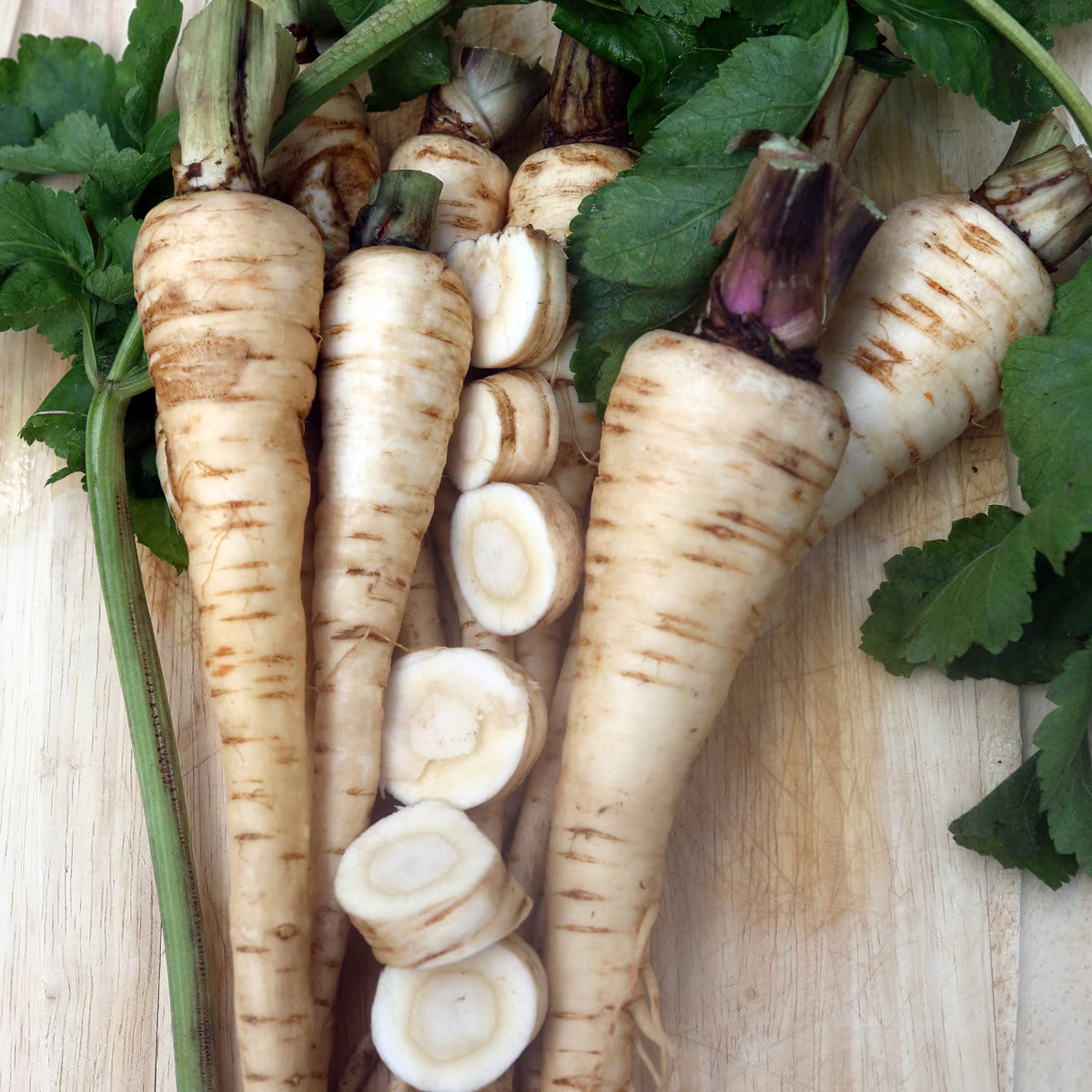
This popular heirloom parsnip variety produces long (up to 15”), smooth, white roots with a sweet, nutty flavor that intensifies after exposure to frost. The roots can be roasted, sautéed, mashed, or puréed and used in stocks, stews, and pot roasts. Also, a good storage variety, ‘Hollow Crown’ can last up to six months in a root cellar.
Growing Habits
Foliage for this deep-rooted vegetable grows 18–24” tall, and roots grow up to 15” into the ground. Parsnips reach maturity in 110-120 days.
How to Harvest and Store
To avoid breakage of the roots while harvesting ‘Hollow Crown’ parsnips, use a garden fork to loosen the soil around the roots before gently pulling up the parsnips. Harvest after a few frosts for a sweeter, nuttier flavor, or leave them in the ground and cover with mulch to harvest in the spring before the tops regrow. After harvesting, shake off loose dirt, trim the tops, and wash them right before use.
Parsnips will keep well for two to four weeks when stored in a plastic bag in the crisper drawer of the refrigerator. For longer storage, up to six months, place in a root cellar.
How to Use
Parsnips do not have to be peeled before using (the skin has extra fiber and nutrients), but should be scrubbed well and are typically cooked before consumption.
Parsnips pair well with many other root vegetables and herbs (like thyme, sage, and parsley) in stews, stocks, pot roasts, and sauces. The sweet, nutty flavor of ‘Hollow Crown’ parsnips makes them perfect for roasting, sautéing, mashing, puréeing, and, yes, even baking into cakes or frying into chips.
Parsnips can be preserved by storing in a root cellar, canning, or freezing.
Growing Instructions
Direct seed ‘Hollow Crown’ parsnip in moist soil as soon as the soil can be worked in spring. In the fall, when the parsnips are mature, they can be left in the ground and harvested when needed. The longer they stay in the ground, and especially after a light frost, the sweeter their taste.
- Direct seed 1/2” deep, 3” apart, in 18–24” apart
- Soil: loose, well-drained, deep, sandy soils that are rich in organic matter
- Germination: 21-28 days
- Light: full sun
If saving seeds, parsnip is a biennial plant that doesn’t produce the seed until the second year. To ensure variety remains true-to-type, plant at an isolation distance of at least 800 feet from other varieties. Parsnip seeds will form in the summer of the second year. When they start to dry up and turn brown, cut stalks and bring them inside for the final drying. To save viable seeds we recommend saving from five plants. To maintain the variety’s health over time, save seeds from between 20–50 plants.
- Choosing a selection results in a full page refresh.
- Opens in a new window.